


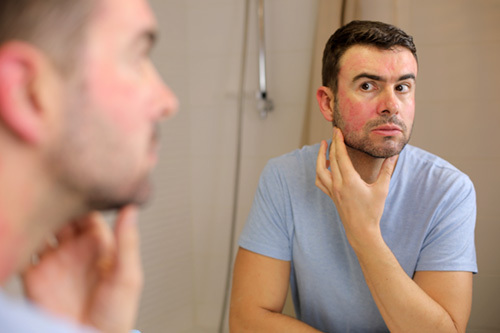
Rosacea is a common, chronic skin condition that primarily affects the face and can appear differently from person to person.
While some people experience mild redness that comes and goes, others may deal with persistent flushing, visible blood vessels, or even eye irritation. Because rosacea can mimic other skin concerns, such as acne or sensitive skin, it is often misunderstood or overlooked.*
This article will walk through the most common symptoms of rosacea, including early warning signs, less obvious symptoms, and eye-related concerns. By gaining insight into what rosacea looks and feels like, you can better recognize the condition in yourself or a loved one and seek appropriate care.
What Are the Symptoms of Rosacea?
Rosacea symptoms typically appear on the central face, including the cheeks, nose, chin, and forehead. However, the condition can also affect the eyes, neck, chest, and scalp. Below are the most common and lesser-known signs to watch for.
Facial Redness and Flushing
One of the hallmark rosacea symptoms on the face is persistent redness that resembles a sunburn. Many people also experience frequent flushing, in which the skin becomes warm, red, and inflamed in response to triggers such as heat, spicy foods, alcohol, or stress.
Visible Blood Vessels
Over time, small blood vessels near the skin’s surface may become enlarged and noticeable, especially on the cheeks and nose. These fine red lines frequently persist even when flushing subsides.
Bumps and Pimples
Some people develop acne-like breakouts with red, swollen bumps and pus-filled blemishes. Unlike usual acne, these flare-ups often appear without blackheads and are concentrated on the central face.
Burning or Stinging Sensation
Rosacea can cause the skin to feel sensitive, tight, or irritated. Many people report burning, stinging, or itching sensations, especially when using certain skincare products.
Thickened Skin
In more advanced cases, the skin may become thick, bumpy, and enlarged, particularly around the nose. This condition, known as rhinophyma, is more common in men and develops gradually.
Eye Irritation
Eye-related symptoms are commonly ignored but are a key part of rosacea for many patients. These are discussed in more detail below.
Ocular and Optical Rosacea Symptoms
Rosacea doesn’t only affect the skin—it can also affect the eyes. Ocular rosacea symptoms may occur with or without visible facial redness, making them harder to connect to a skin condition.
Common eye-related symptoms include:
- Red, bloodshot eyes
- Dryness or gritty sensation
- Burning or stinging
- Sensitivity to light
- Swollen eyelids
- Frequent styes
Some people may also notice blurry vision or worsening irritation throughout the day. While “optical rosacea symptoms” is often used interchangeably with ocular rosacea, both refer to rosacea-related eye involvement that requires medical attention.
If left untreated, ocular rosacea could cause serious eye complications, so it’s important to bring up any eye discomfort to your dermatologist or eye doctor.
Early Stage Rosacea Symptoms
Recognizing early signs of rosacea can help you manage the condition before it becomes more severe or chronic. In the beginning stages, rosacea often appears as:
- Occasional facial flushing
- Mild redness that fades over time
- Warmth or tingling in the skin
- Sensitivity to skincare products
These symptoms may come and go, making them easy to dismiss. However, without treatment, rosacea often becomes more consistent and noticeable over time.
When Does Rosacea Start?
Rosacea most commonly begins between the ages of 30 and 50, but it can develop earlier or later in life. Fair-skinned individuals, particularly those of Northern European descent, are at higher risk, though rosacea can affect people of all skin tones.
It is also possible for rosacea to appear later in adulthood, especially if environmental or daily habits increase skin inflammation.
Less Common Rosacea Symptoms
In addition to facial redness and breakouts, rosacea can cause symptoms that may not immediately seem skin-related:
- Neck, chest, or scalp redness
- Facial swelling, especially around the eyes
- Dry, rough patches of skin
- Persistent facial warmth
These less obvious symptoms can still impact comfort and confidence, making proper diagnosis and treatment essential.
Get Treatment for Rosacea
Rosacea is a long-term condition, but its symptoms can be efficiently treated with professional care. Treatment plans often include prescription topical or oral medications, gentle skincare routines, and changes in daily habits to avoid known triggers.
Understanding the symptoms of rosacea—from early flushing to eye irritation—gives you the confidence to take control of your skin health. If you notice persistent redness, breakouts that don’t respond to acne treatments, or eye discomfort, it may be time to seek expert guidance.
At Dermatology Partners, our experienced providers specialize in diagnosing and treating rosacea with personalized care plans designed to improve both skin comfort and appearance. Whether you’re experiencing rosacea symptoms on your face, early warning signs, or ocular rosacea symptoms, we’re here to help.
Schedule an appointment today to learn more about your treatment options and take the next step toward healthier, clearer skin.
*Medical Disclaimer
The information provided in this article is for general educational purposes only and is not intended as a substitute for professional medical advice, diagnosis, or treatment. Always seek the guidance of a qualified healthcare provider with any questions you may have regarding a medical condition. Dermatology Partners is not responsible for any errors, omissions, or outcomes resulting from reliance on this information.
Sources
Mayo Clinic Staff. (2023, October 17). Rosacea – Symptoms and causes. Mayo Clinic. https://www.mayoclinic.org/diseases-conditions/rosacea/symptoms-causes/syc-20353815
Mayo Clinic Staff. (n.d.). Ocular rosacea – Symptoms and causes. Mayo Clinic. https://www.mayoclinic.org/diseases-conditions/ocular-rosacea/symptoms-causes/syc-20375798
American Academy of Dermatology Association. (n.d.). Rosacea: Signs and symptoms. https://www.aad.org/dermatology-a-to-z/diseases-and-treatments/q---t/rosacea/signs-symptoms
National Institute of Arthritis and Musculoskeletal and Skin Diseases. (n.d.). Rosacea symptoms, causes, and risk factors. https://www.niams.nih.gov/health-topics/rosacea
Rosacea.org. (n.d.). All about rosacea: Signs, symptoms and treatment. https://www.rosacea.org/index.php/patients/all-about-rosacea
Cleveland Clinic. (n.d.). Rosacea: Symptoms, causes, triggers & treatment. https://my.clevelandclinic.org/health/diseases/12174-rosacea
Johns Hopkins Medicine. (n.d.). Rosacea. https://www.hopkinsmedicine.org/health/conditions-and-diseases/rosacea


