


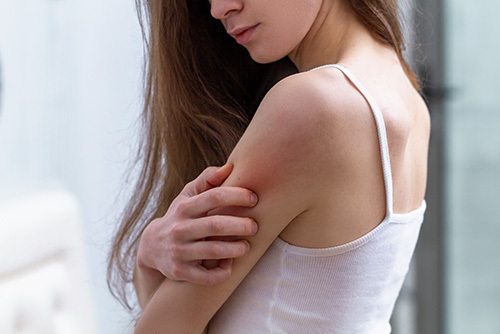
Eczema is a chronic skin condition that affects millions of people of all ages. While it often begins in childhood, it can persist into adulthood. Understanding the signs and symptoms of eczema is an important first step toward managing flare-ups and protecting your skin’s health.*
Eczema can look different from person to person, and symptoms may range from mild irritation to severe eczema that hampers daily life. Some people experience occasional dry patches, while others struggle with intense itching, inflammation, and even blistering. Below, we break down the most common symptoms, how they vary by eczema type, where they appear on the body, and what makes eczema worse.
Symptoms of Eczema: From Severe to Mild
The symptoms of eczema exist on a spectrum. Some people experience only mild dryness, while others develop painful, inflamed skin that can crack, bleed, or become infected.
Severe Eczema Symptoms
- Intense, persistent itching
- Thickened, leathery skin
- Open sores or cracked skin
- Swelling and redness
- Oozing or crusting
- Blistering eczema, especially in dyshidrotic eczema
Severe flare-ups can interfere with sleep, work, and daily comfort. Scratching often worsens the condition, leading to broken skin and a higher infection risk.
Moderate Symptoms
- Inflamed, red, or darkened skin
- Rough, scaly texture
- Eczema patches that appear in clusters
- Burning or stinging sensations
Mild Symptoms
- Dry or sensitive skin
- Occasional itching
- Small patches of irritation
Even mild eczema can worsen without proper care, making early treatment essential.
Eczema and Itchy Skin
One of the most recognizable features of eczema is itchiness. Eczema and itchy skin go hand in hand, and for many patients, the itching is the most disruptive symptom. The itch can range from mild to severe and may worsen at night, affecting sleep quality.
Scratching offers temporary relief but damages the skin barrier. Over time, this can lead to thicker skin, increased inflammation, and a cycle of worsening symptoms.
Symptoms That Vary by Eczema Type
Different forms of eczema cause slightly different symptoms:
- Atopic Dermatitis: Dry, itchy, inflamed skin that often appears on the face, elbows, and knees.
- Dyshidrotic Eczema: Small, itchy blisters on the hands and feet—commonly referred to as blistering eczema.
- Contact Dermatitis: Red, irritated skin caused by allergens as well as irritants such as fragrances or metals.
- Nummular Eczema: Coin-shaped eczema patches that are itchy and inflamed.
- Seborrheic Dermatitis: Greasy, flaky skin on the scalp, face, and chest.
Each type has unique triggers and treatment needs, but all share common symptoms like irritation, dryness, and itching.
Where Eczema Commonly Appears on the Body
Eczema can affect nearly any part of the body, but certain areas are more commonly impacted.
Hands
Hand eczema often causes dry, cracked skin and painful fissures. Constant hand washing, harsh soaps, and exposure to chemicals can worsen symptoms.
Face
Facial eczema can cause redness, flaking, and swelling around the eyes, nose, and mouth. Because facial skin is sensitive, symptoms may appear more severe.
Head and Scalp
Eczema on the scalp may resemble dandruff but can include redness, itching, and thick flakes.
Arms and Legs
Many patients develop eczema on the elbows, knees, wrists, and ankles. These areas often show visible eczema patches and can become thickened over time.
What Makes Eczema Worse?
Understanding what makes eczema worse can help prevent flare-ups and protect your skin. Common triggers include:
- Dry weather: Low humidity strips moisture from the skin
- Harsh soaps or detergents: These irritate and dry the skin
- Stress: Emotional stress can trigger flare-ups
- Allergens: Dust mites, pollen, pet dander, and certain foods
- Sweating: Heat and friction can increase irritation
- Fragrances and chemicals: Found in many skincare and cleaning products
Avoiding known triggers and using gentle, fragrance-free skincare products can greatly reduce symptom severity.
When Eczema Becomes Severe
Severe eczema can involve widespread inflammation, open sores, infections, and intense itching that disrupts sleep and daily activities. If your symptoms include:
- Persistent pain
- Bleeding or oozing skin
- Signs of infection (pus, fever, swelling)
- No improvement with over-the-counter treatments
It may be time to seek professional care. Prescription medications, targeted therapies, and individualized care strategies can help control symptoms.
Get Eczema Treatment
Living with eczema can be frustrating, but effective treatment is available. From identifying triggers to creating a customized skincare plan, a board-certified dermatologist can help manage both mild and severe eczema.
At Dermatology Partners, our experienced providers understand the full range of eczema signs and symptoms and offer evidence-based solutions to relieve itching, reduce inflammation, and protect your skin’s health.
If you or a loved one is struggling with persistent eczema symptoms, schedule an appointment now to discover treatment options and regain comfort in your skin.
*Medical Disclaimer
The information provided in this article is for general educational purposes only and is not intended as a substitute for professional medical advice, diagnosis, or treatment. Always seek the guidance of a qualified healthcare provider with any questions you may have regarding a medical condition. Dermatology Partners is not responsible for any errors, omissions, or outcomes resulting from reliance on this information.
Source
American Academy of Dermatology Association. (n.d.). Eczema: Signs and symptoms.
https://www.aad.org/public/diseases/eczema/types/atopic-dermatitis/symptoms
American Academy of Dermatology Association. (n.d.). Eczema: Causes and triggers.
https://www.aad.org/public/diseases/eczema/types/atopic-dermatitis/causes
National Eczema Association. (n.d.). What is eczema?
https://nationaleczema.org/eczema/
National Eczema Association. (n.d.). Types of eczema.
https://nationaleczema.org/eczema/types-of-eczema/
National Institute of Arthritis and Musculoskeletal and Skin Diseases. (n.d.). Atopic dermatitis (eczema).
https://www.niams.nih.gov/health-topics/atopic-dermatitis
Mayo Clinic. (n.d.). Eczema (atopic dermatitis): Symptoms and causes.
https://www.mayoclinic.org/diseases-conditions/atopic-dermatitis-eczema/symptoms-causes/syc-20353273


