


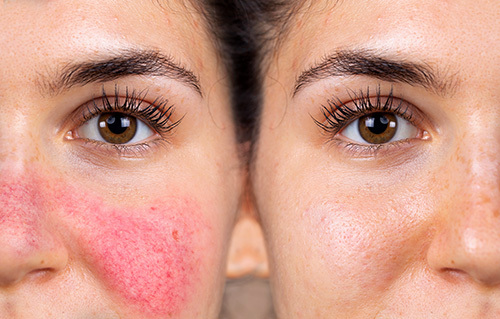
Rosacea is a chronic skin condition that impacts millions of people. It most commonly appears on the face and impacts the tiny blood vessels in the skin, often causing redness, flushing, or acne-like bumps.
Many people first notice that their cheeks, nose, or forehead begin to look red or irritated, especially after certain triggers like heat or stress.*
If you’ve been diagnosed with rosacea—or suspect you may have it—you may find yourself asking an important question: Is rosacea always visible?
The answer isn’t always straightforward. For many people, rosacea comes and goes, especially in the early stages. Understanding how rosacea behaves, what causes flare-ups, and what treatment options are available can help you better manage the condition and keep symptoms under control.
Is Rosacea Always Visible?
One of the most common questions patients ask is, “Is rosacea always visible?” The short answer is no—at least not at first.
In the early stages, rosacea symptoms can appear and disappear. You might notice periods where your skin looks normal, followed by times when redness or irritation suddenly flares up. These flare-ups may last for a few hours, several days, or even longer before calming down again.
Over time, however, rosacea can become more noticeable if it is not properly treated or managed. Persistent redness is often one of the most common signs. Some people may also develop:
- Visible blood vessels (sometimes called “broken capillaries”)
- Small red bumps that resemble acne
- Thickened skin around the nose
- Eye irritation, redness, or watering
In fact, studies suggest that around 77% of people with rosacea experience persistent redness, visible blood vessels, or acne-like bumps at some point during the course of the condition. While not everyone experiences all of these symptoms, they are some of the most recognizable signs.
The good news is that with proper rosacea management and treatment, many people can reduce how often these symptoms appear—and how visible they are.
What Causes Rosacea Flare-Ups?
Another common concern patients have is what causes rosacea flare-ups.
While the exact cause of rosacea isn’t fully understood, dermatologists know that certain triggers can worsen symptoms. These triggers often cause blood vessels in the skin to expand, leading to redness and inflammation.
Common rosacea triggers include:
Environmental Factors
Changes in weather or exposure to certain conditions can easily trigger symptoms. These may include:
- Sun exposure
- Hot or cold weather
- Wind
- Humidity
Sunlight is one of the most common triggers, which is why daily sunscreen use is so important for people with rosacea.
Food and Drink
Certain foods and beverages can also trigger flare-ups for some individuals. Common examples include:
- Spicy foods
- Alcohol
- Hot drinks like coffee or tea
Not everyone reacts the same way, so keeping track of your personal triggers can be helpful.
Emotional Triggers
Emotions can also have a role. Stress, anxiety, embarrassment, or anger may cause the face to flush, worsening rosacea symptoms.
Because triggers vary from person to person, identifying your own patterns is an important part of effective rosacea management.
Managing Rosacea and Redness
Although there is currently no permanent cure for rosacea, many effective strategies can help manage symptoms and keep flare-ups under control.
Good rosacea management usually includes a combination of skincare, lifestyle changes, and professional dermatologic care.
Gentle Skincare
Using the right products can make all the difference in keeping sensitive skin calm. Dermatologists often recommend:
- Fragrance-free or sensitive skin products
- Gentle cleansers
- Moisturizers designed for sensitive skin
Some moisturizers contain a green-tinted base, which can help neutralize the appearance of redness.
Makeup Options
For patients who want to reduce the appearance of redness, certain cosmetic products may help provide temporary coverage, including:
- Oil-free concealers or foundations
- Mineral powders that help tone down redness
- Color-correcting products
These options can improve the appearance of the skin while you work with a dermatologist on long-term treatment.
Sun Protection
Sunscreen is one of the most important steps for managing rosacea. Daily use of a broad-spectrum sunscreen can help prevent flare-ups caused by UV exposure.
Look for sunscreens that are:
- Broad-spectrum (UVA and UVB protection)
- SPF 30 or higher
- Formulated for sensitive skin
Rosacea Treatment Options
If rosacea symptoms persist or are difficult to control, professional rosacea treatment may be recommended.
Dermatologists may suggest several treatment options depending on the severity of your symptoms. These can include:
- Topical antibacterial or anti-inflammatory creams
- Prescription medications that reduce redness and inflammation
- Laser or light-based treatments that target visible blood vessels
These treatments can greatly reduce redness, bumps, and irritation while helping prevent worsening of symptoms over time.
The sooner rosacea is diagnosed and treated, the easier it is to control symptoms before they become permanent.
Living Confidently With Rosacea
Living with rosacea can be frustrating at times. Visible redness or flare-ups may make people feel self-conscious about their appearance. But understanding the condition—and knowing that effective treatment options exist—can make a big difference.
While many patients ask, “Is rosacea always visible?”, the reality is that with proper rosacea management, the condition can often be controlled very successfully.
By identifying triggers, using gentle skincare products, protecting your skin from the sun, and working with a dermatology professional to develop a personalized rosacea treatment plan, you can reduce symptoms and protect your skin long term.
Rosacea may be a chronic condition, but it doesn’t have to control your life. With the right care and guidance, you can manage symptoms, protect your skin, and feel confident in your appearance. Schedule an appointment today to get the professional help you deserve.
*Medical Disclaimer
The information provided in this article is for general educational purposes only and is not intended as a substitute for professional medical advice, diagnosis, or treatment. Always seek the guidance of a qualified healthcare provider with any questions you may have regarding a medical condition. Dermatology Partners is not responsible for any errors, omissions, or outcomes resulting from reliance on this information.
Sources
National Rosacea Society. (n.d.). All about rosacea. Retrieved March 10, 2026, from https://www.rosacea.org/patients/all-about-rosacea
Cleveland Clinic. (2023, April 12). Rosacea: Symptoms, causes, triggers & treatment. https://my.clevelandclinic.org/health/diseases/12174-rosacea
Face Up to Rosacea. (2022). What is rosacea? https://www.faceuptorosacea.com/what-rosacea


