


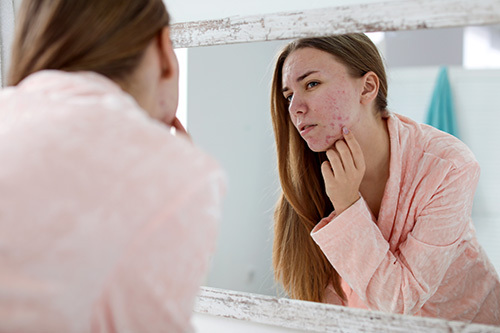
Acne is a very common skin condition, but it affects everyone differently. There are several types of acne, and each one can show up in its own way. Some people get small blackheads or whiteheads, while others have painful cysts that form deep under the skin.
Acne does not only show up on the face. It can also appear on your back, chest, shoulders, or jawline. Knowing about the four main types of acne and how they look can help you decide when to see a professional for treatment.*
The 4 Types of Acne
Cystic Acne
Cystic acne is a severe type of acne. It forms deep under the skin and causes large, painful bumps filled with pus. This kind of acne leads to significant inflammation and often causes permanent scars.
Picking or popping cystic acne is a common reason for acne scars. This can damage your skin and worsen inflammation.
Fungal Acne
Fungal acne can look like regular acne, but it is caused by yeast growing inside hair follicles. It usually shows up as small, itchy, red bumps, often on the chest, shoulders, back, or forehead.
Since fungal acne looks much like normal breakouts, many people do not realize they have a different skin condition.
Hormonal Acne
Hormonal acne is very common in adults. It happens when hormonal changes cause the skin to produce more oil. Too much oil or sebum can clog pores and cause breakouts.
This kind of acne often shows up around the chin, jawline, and lower face. Hormonal acne can get worse during puberty, pregnancy, times of stress, or other changes in hormones.
Nodular Acne
Nodular acne is another serious type of acne that forms deep under the skin. It causes hard, painful lumps that can stay swollen for weeks.
Like cystic acne, nodular acne can lead to permanent scars if left untreated.
Types of Acne Pimples and How They Look
Acne can look different from person to person. Here are some of the most common types of pimples people get.
Blackheads
Blackheads happen when pores get clogged with oil, dead skin cells, and other debris. Since the pore remains open, air causes the clogged material to turn dark.
Blackheads usually appear on the nose, chin, and forehead. Clogged pores are sometimes called “comedones.” Products labeled “noncomedogenic” are designed to help prevent clogged pores.
Whiteheads
Whiteheads are like blackheads, but the pore closes instead of staying open. Because air cannot reach the clog, it stays white or the same color as your skin.
Whiteheads can appear almost anywhere on your body, including your face, chest, shoulders, and back.
Papules
Papules are small pink or red bumps that usually feel tender when touched. These bumps are inflamed but do not contain pus.
Pustules
Pustules are what most people call pimples. They are red bumps filled with white or yellow pus.
Nodules
Nodules are large, painful bumps that form deep under the skin. These are more serious and often need treatment from a professional.
Cysts
Cysts are large, soft lumps filled with pus that form deep under the skin. Unlike nodules, cysts are usually tender and feel soft when you touch them. They often look red or swollen and are more likely to leave scars than other pimples.
Cysts form when pores get very inflamed. This causes the pore walls to break down, allowing pus and bacteria to accumulate under the skin.
What Causes Acne?
Many people wonder what causes acne, but the answer varies from person to person. Acne can occur for many reasons and often involves multiple causes.
Some of the most common causes include:
- Hormonal changes
- Excess oil production
- Family history
- Certain medications
- Clogged pores
- Inflammation
Hormones are a major cause of acne, especially during puberty. At this time, the body produces more androgens, which may increase sebum production. Pregnancy and stress can also cause hormonal breakouts.
Family history can also be a factor. Studies show that acne often runs in families, so you may be more likely to get acne if your parents had it.
Some medications, like corticosteroids, lithium, and certain hormone medicines, can also cause acne flare-ups.
Schedule an Appointment
If you have painful breakouts, frequent acne, or signs of scarring, professional treatment can help. Our dermatology team can determine the type of acne you have and recommend treatments to help you achieve clearer, healthier skin.
Call our office or schedule an appointment online today.
*Medical Disclaimer
The information provided in this article is for general educational purposes only and is not intended as a substitute for professional medical advice, diagnosis, or treatment. Always seek the guidance of a qualified healthcare provider with any questions you may have regarding a medical condition. Dermatology Partners is not responsible for any errors, omissions, or outcomes resulting from reliance on this information.
Source
Cleveland Clinic. (n.d.). Acne. Cleveland Clinic. https://my.clevelandclinic.org/health/diseases/12233-acne
National Institute of Arthritis and Musculoskeletal and Skin Diseases. (n.d.). Acne. U.S. Department of Health and Human Services. https://www.niams.nih.gov/health-topics/acne
WebMD. (n.d.). Acne dictionary: Acne types, pimples, cysts, and more. WebMD. https://www.webmd.com/skin-problems-and-treatments/acne/ss/slideshow-acne-dictionary
CeraVe. (n.d.). Understanding and treating different types of acne. CeraVe. https://www.cerave.com/skin-smarts/skincare-tips-advice/understanding-and-treating-different-types-of-acne


