


Each June, people across the country take part in Scleroderma Awareness Month to help others learn about this rare autoimmune disease. Many have heard of scleroderma, but few know what it really is
, who it affects, or how serious it can be. Knowing the basics can help people spot symptoms early and get the care they need.
If you have ever wondered what scleroderma is, you are not alone. This condition affects around 300,000 Americans and can impact more than just the skin. Here are five key things to know about scleroderma, including its symptoms, possible complications, and treatment options.*
1. What is Scleroderma?
Scleroderma is a long-term autoimmune disease that makes the body produce too much collagen. Collagen is a protein that supports the skin and connective tissues. In people with scleroderma, extra collagen builds up, making the skin and tissues hard or tight.
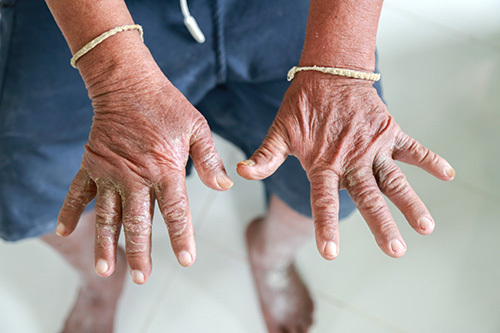
For many, the first signs show up on the skin. Some areas may feel thick, tight, swollen, or itchy. The skin might look shiny because it is stretched more than normal. Some people also notice patches that are lighter or darker than the rest of their skin.
Although scleroderma usually affects the skin, it can also impact other parts of the body. That is why early diagnosis and regular check-ups are important.
It is also important to know that scleroderma symptoms can vary widely from person to person. Some may have only mild skin changes, while others can develop serious problems with their internal organs.
2. Certain Areas of the Body Are Commonly Affected
Scleroderma often begins in small areas before spreading. The fingers, hands, feet, and face are usually the first places where symptoms show up. Swelling in the fingers or hands is a common early sign.
Over time, some people may also develop symptoms in the:
- Forearms
- Upper arms
- Chest
- Abdomen
- Lower legs
- Thighs
When the skin tightens, it can be harder to bend your fingers, move your joints, or do daily tasks comfortably. Some people say their skin feels stiff or too tight.
Raynaud’s phenomenon is a common condition linked to scleroderma. Many people look up Raynaud's syndrome and scleroderma because they are closely related. Raynaud’s makes the blood vessels in the fingers and toes narrow, especially when it is cold or during stress. This can cause fingers or toes to turn white, blue, or red and may cause pain, tingling, or numbness.
For some people, Raynaud’s phenomenon is one of the first signs of scleroderma.
3. Women Are More Commonly Affected
Researchers are still learning what causes scleroderma, but doctors do know that some groups are affected more often than others.
Women are much more likely to get scleroderma than men. In fact, women are diagnosed about four times as often as men. The disease usually appears between ages 25 and 55, but it can happen at any age.
There are also two main forms of the disease:
- Localized scleroderma: Usually affects only the skin and is more common in children.
- Systemic scleroderma: Can affect the skin, blood vessels, and internal organs. This form is more common in adults.
Right now, doctors do not think scleroderma is directly inherited. Still, some experts believe there may be a genetic risk in families with a history of autoimmune or rheumatic diseases.
Although the exact causes of scleroderma remain unknown, researchers are working to understand how the immune system, genetics, and environment might all play a role.
4. Scleroderma Can Become Serious
It is important to know that scleroderma is more than just a skin condition. In some cases, it can become very serious.
Localized scleroderma usually affects only the skin and may improve over time. Systemic scleroderma, on the other hand, can affect organs like the lungs, digestive system, heart, and kidneys.
When the lungs or digestive tract become involved, complications can become severe. Some people experience:
- Trouble swallowing
- Heartburn or acid reflux
- Bloating
- Constipation or diarrhea
- Shortness of breath
- Chronic coughing
Since systemic scleroderma can affect blood vessels and organs, it is very important to have regular medical care.
This is why it is important to talk about Raynaud's syndrome and scleroderma. If Raynaud’s reduces blood flow for too long, it can sometimes cause sores or damage in the fingers and toes.
5. Are There Ways to Manage Symptoms
There is no cure for scleroderma right now, but many treatments can help manage symptoms and improve quality of life. The main goals are to reduce the risk of complications, reduce discomfort, and slow the progression of the disease.
Depending on symptoms, doctors may recommend:
- Blood pressure medications to improve circulation and help with Raynaud’s symptoms
- Immunosuppressant medications to calm the immune system
- Acid reflux or digestive medications to reduce stomach discomfort
- Pain relievers for joint or muscle pain
- Vaccinations to help prevent infections like flu, pneumonia, shingles, RSV, and HPV
Physical and occupational therapy can also help people keep their strength, flexibility, and independence in daily life.
In severe cases, doctors may consider advanced treatments like stem cell therapy if other options have not worked.
When to See a Dermatology Provider
If you notice thickening or tightness of the skin, swelling in your fingers, or symptoms related to Raynaud's syndrome and scleroderma, talk to a healthcare provider. Finding the problem early can help lower the risk of complications and improve long-term health.
At Dermatology Partners, our team is here to help you understand your skin health and connect you with the right care. If you or someone you care about has symptoms of scleroderma or other skin issues, contact our office to schedule an appointment.
*Medical Disclaimer
The information provided in this article is for general educational purposes only and is not intended as a substitute for professional medical advice, diagnosis, or treatment. Always seek the guidance of a qualified healthcare provider with any questions you may have regarding a medical condition. Dermatology Partners is not responsible for any errors, omissions, or outcomes resulting from reliance on this information.
Source
Cleveland Clinic. (n.d.). Scleroderma. https://my.clevelandclinic.org/health/diseases/scleroderma
Mayo Clinic Staff. (n.d.). Scleroderma: Diagnosis and treatment. Mayo Clinic. https://www.mayoclinic.org/diseases-conditions/scleroderma/diagnosis-treatment/drc-20351957
Mayo Clinic Staff. (n.d.). Scleroderma: Symptoms and causes. Mayo Clinic. https://www.mayoclinic.org/diseases-conditions/scleroderma/symptoms-causes/syc-20351952
Scleroderma Foundation. (n.d.). Understanding scleroderma. https://scleroderma.org/understanding-scleroderma/
Yale Medicine. (n.d.). What to know about scleroderma. Yale University. https://medicine.yale.edu/news-article/what-to-know-about-scleroderma/
MedlinePlus. (n.d.). Scleroderma. U.S. National Library of Medicine. https://medlineplus.gov/scleroderma.html


