


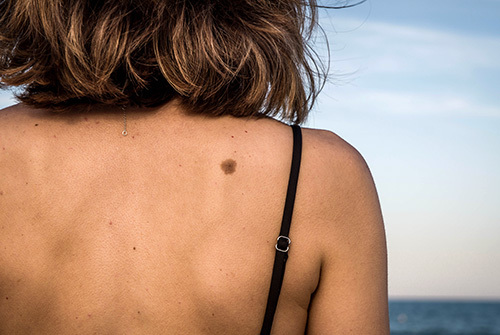
May is Skin Cancer Awareness Month, dedicated to increasing knowledge about the most common cancer in the United States.*
This month, our goal is to help you understand what skin cancer is and how to prevent it.
How Common Is Skin Cancer?
Skin cancer is the most common form of cancer in America. In fact, about 1 in 5 Americans will develop skin cancer in their lifetime. Each day, an estimated 9,500 people in the U.S. are diagnosed with some form of skin cancer.
There are three main types:
- Basal Cell Carcinoma (BCC): The most common type, making up about 80% of cases. It often appears as a pearly or flesh-colored bump and grows slowly.
- Squamous Cell Carcinoma (SCC): The second most common, accounting for about 20% of cases. It may look like a red, scaly patch or a sore that doesn’t heal.
- Melanoma: The least common (3% or less), but the most dangerous. Melanoma is more likely to spread to other parts of the body if not caught early.
What Increases Your Risk?
Several factors can increase your risk of developing skin cancer:
- Sun Exposure: Prolonged exposure to ultraviolet (UV) rays from the sun without proper protection is the leading cause of all skin cancers.
- Indoor Tanning: Tanning beds are especially harmful. They increase the risk of:
- Basal cell carcinoma by 29%
- Squamous cell carcinoma by 85%
- Melanoma, especially in people under 30
- People who have used tanning beds are up to six times more likely to develop melanoma.
- Skin Type: People with lighter skin, freckles, or a history of sunburns are at higher risk. However, skin cancer can still occur in people with darker skin tones. In these cases, it is often diagnosed later, which can make it more serious.
- Gender and Age: Squamous cell carcinoma is more common in men, and most skin cancers are diagnosed in adults over 50. However, rates in younger people are rising.
Why Early Detection Matters
When caught early, most skin cancers are highly treatable. That’s why it’s important to check your skin regularly and watch for any changes.
Look for:
- New growths or spots
- Moles that change in size, shape, or color
- Sores that don’t heal
- Spots that itch, bleed, or become painful
If you notice anything unusual, it’s important to have it evaluated by a dermatology provider.
Simple Ways to Stay Sun-Safe
The good news is that skin cancer is one of the most preventable types of cancer. A few simple habits can make a big difference:
- Wear a broad-spectrum sunscreen with SPF 30 or higher every day
- Reapply sunscreen every two hours, especially when outdoors
- Seek shade during peak sun hours (10 a.m. to 4 p.m.)
- Wear protective clothing, including hats and sunglasses
- Avoid indoor tanning completely
Take Action This May
This month, take charge: schedule a skin check, discuss concerns with your provider, and commit to daily sun protection.
Act now—protecting your skin today helps prevent skin cancer tomorrow. Schedule an appointment at a Dermatology Partners clinic near you.
*Medical Disclaimer
The information provided in this article is for general educational purposes only and is not intended as a substitute for professional medical advice, diagnosis, or treatment. Always seek the guidance of a qualified healthcare provider with any questions you may have regarding a medical condition. Dermatology Partners is not responsible for any errors, omissions, or outcomes resulting from reliance on this information.
Sources
The Skin Cancer Foundation. (n.d.). Skin cancer facts & statistics. Retrieved April 1, 2026, from https://www.skincancer.org/skin-cancer-information/skin-cancer-facts/
American Academy of Dermatology. (n.d.). Skin cancer statistics. Retrieved April 1, 2026, from https://www.aad.org/media/stats-skin-cancer


